
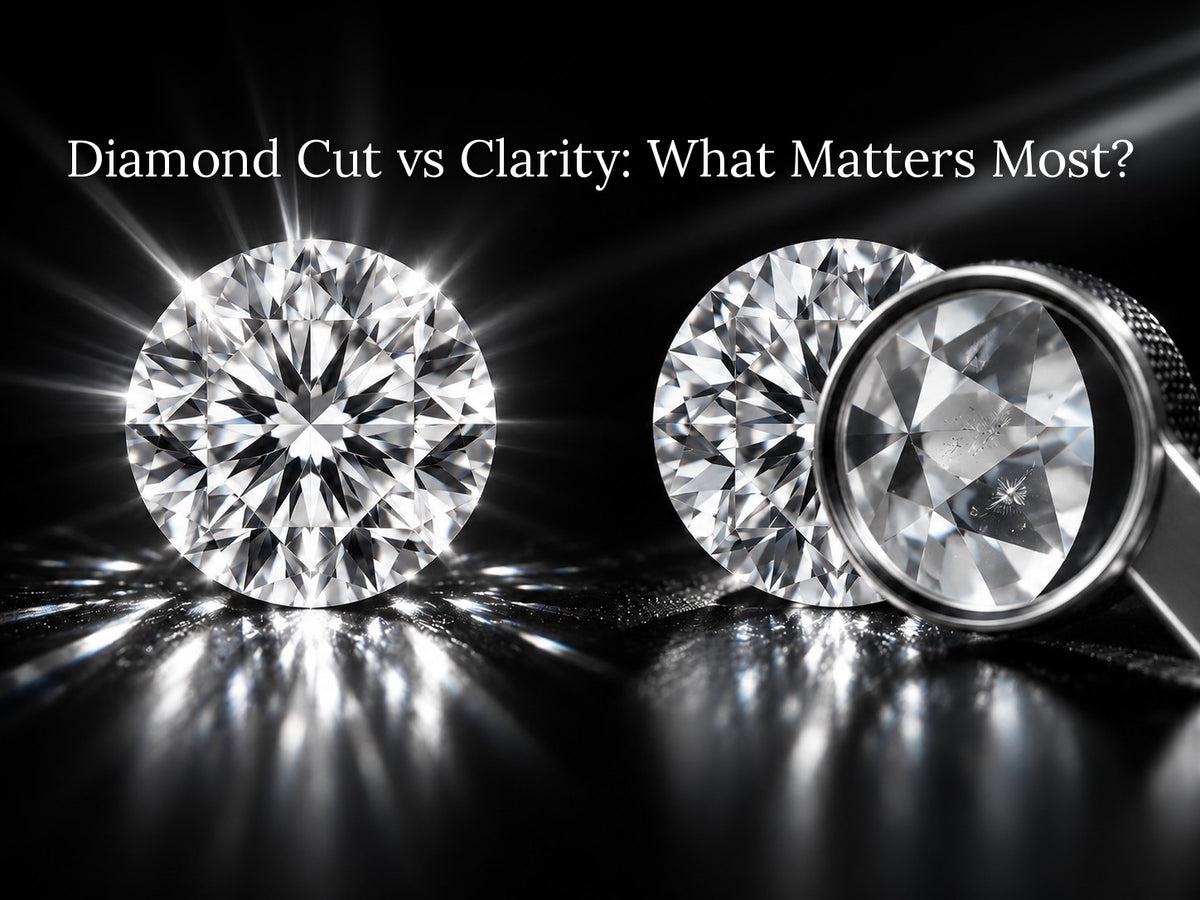

Diamond Cut vs Clarity: What Matters Most?
Share
A diamond can look dramatically different from another stone with the same budget, and the reason is usually cut, not a tiny clarity upgrade. For shoppers comparing an engagement ring or another piece of diamond jewelry, the real question is rarely whether VVS sounds better than VS. It is whether the diamond looks bright, lively, and clean in normal viewing conditions. This guide breaks down the tradeoffs behind diamond cut vs clarity, where color and carat fit in, and how to choose the stone that gives the best visible value.
Diamond Cut vs Clarity: The Quick Answer
Cut usually matters more for visible beauty because it controls how strongly a diamond reflects light. Clarity matters too, but once a stone is eye-clean, the eye stops caring much about microscopic features. That is why many buyers should prioritize an excellent cut before chasing higher clarity grades. The rest of this article explains the tradeoffs, where budget stretches further, and why shape can change the answer.
How the 4Cs of Diamond Quality Work Together
The 4Cs of diamond quality are cut, clarity, color, and carat, and they work as a system rather than separate checkboxes. A strong stone balances all four within the same budget, which is why improving one C often means accepting less in another. A larger carat weight may force a compromise on clarity or cut, while a cleaner look may require a more careful choice of color. That balance is where diamond cut vs clarity becomes confusing, especially for first-time engagement ring buyers.
What Diamond Cut Really Means
Diamond cut is about proportions, symmetry, and polish, not just diamond shape. It determines how well the stone interacts with light in normal viewing conditions, which affects brilliance, fire, and sparkle. An excellent cut can make a diamond look crisp and lively even before anyone thinks about grades. By contrast, a poor cut can leave even a high-clarity diamond looking flat or sleepy. In practical terms, cut is the performance factor: it decides whether the diamond looks bright and animated.
Why excellent cut affects sparkle most
Light enters a well-cut diamond, bounces through the facets, and returns to the eye in a bright pattern. That return is what makes a stone look alive. People usually notice brightness and sparkle long before they notice tiny imperfections, especially from a normal arm’s-length viewing distance. This is why excellent cut often delivers the strongest visible upgrade, while higher clarity grades may change very little once the stone already looks clean.
What Is Diamond Clarity?
Diamond clarity describes the presence or absence of inclusions and blemishes. Inclusions are internal features, while blemishes are external blemishes on the surface. Graders use 10x magnification to assess these details, which means many marks are only visible under a loupe or microscope. That is why a diamond can have minor inclusions and still look perfectly clean to the naked eye. For shoppers, the most useful standard is often not a rare clarity label, but whether the diamond is eye-clean.
Inclusions, blemishes, and eye-clean diamonds
An inclusion sits inside the diamond, while an external blemish affects the outside. In everyday wear, what matters is whether those features can be seen without magnification. An eye-clean diamond looks free of obvious flaws under normal viewing conditions, even if a report shows tiny marks. That practical standard helps buyers focus on what the ring actually looks like, not just what the grading document says.
Why Cut Usually Matters More Than Clarity
Cut has the biggest impact on the parts of a diamond people notice first: sparkle, brightness, and life. A well-cut lower-clarity stone can easily look better than a poorly cut stone with a higher clarity grade, because the eye responds to light performance before microscopic perfection. That is the core of diamond cut vs clarity for most shoppers. If a diamond looks bright, lively, and eye-clean, paying extra for a higher clarity grade may offer little visible return.
How cut and clarity affect appearance differently
Cut is a performance factor; clarity is a cleanliness factor. Sparkle can distract from small inclusions, but it cannot rescue weak light return. In other words, a diamond with excellent cut can still look beautiful even with minor inclusions, while a dull diamond exposes its flaws more easily. That difference is why cut and clarity should not be treated as equals when the goal is visible beauty.
When Clarity Becomes More Important
Clarity matters more as diamond size increases, because larger stones give the eye more surface area to inspect. It also matters more in step-cut shapes like emerald and Asscher, where the open facets reveal the interior more clearly than brilliant cuts. In those cases, a higher clarity grade can be worth the added cost if the goal is a cleaner, more open look. Still, many buyers spend more than necessary on higher clarity when the stone already looks clean to the naked eye.
Shape matters: step cuts vs brilliant cuts
Step cuts look more like mirrored windows, while brilliant cuts use many smaller facets to hide small marks and boost sparkle. That is why round brilliant stones usually hide inclusions better than step-cut shapes. If a buyer wants a shape that is naturally forgiving, brilliant cuts like the round brilliant often make it easier to choose a lower clarity grade without sacrificing appearance. For open styles, the clarity threshold may need to be higher.
How to Choose an Eye-Clean Diamond
Eye-clean means the diamond looks clean without magnification, not just on paper. Many VS stones, and even some SI stones, can appear perfectly clean in normal viewing conditions. That makes eye-clean diamonds a smart target for buyers who want beauty without paying for perfection no one can see. The goal is to judge what shows up in real life, then allocate the budget where it improves the look most.
What to look for on a grading report
On a report, check where the inclusion sits, how large it is, and whether its position makes it easy to spot. A tiny mark near the edge may matter less than one under the table, where the eye naturally looks first. The number of inclusions matters, but visibility matters more. That practical reading of the report keeps the focus on shopping value rather than chasing a higher clarity grade for its own sake.
Budget Allocation: Where Your Money Goes Further
For most engagement ring purchases, budget allocation works best when cut comes first. An excellent cut often delivers the biggest visible upgrade, while a small clarity compromise can free money for a better light return or a slightly larger stone. That tradeoff matters in gold settings too, whether the design is 10k rose gold, 14k white gold, or 18k white gold. Buyers looking at natural diamonds or lab diamonds can use the same logic: spend where the eye notices the difference.
Cut, clarity, color, or carat: what to prioritize
A simple order helps: choose excellent cut first, keep clarity eye-clean, then decide on color and carat. If the budget is tight, a modest clarity grade that still looks clean is usually a better value than a higher clarity grade no one can see. Carat weight should come last, after the diamond already looks bright and balanced. That approach tends to create the best-looking ring for the money.
How Carat Weight Changes the Cut vs Clarity Choice
Carat weight changes the conversation because larger diamonds make inclusions easier to notice. A stone that looks flawless at a smaller size may reveal more detail once it grows, so higher clarity grades can become more relevant. But bigger is not automatically better if sparkle suffers from a weak cut. The smartest choice balances size, brightness, and visibility instead of pushing carat weight at the expense of beauty.
Why size can change clarity expectations
The larger the diamond, the more area the eye has to scan. That means a buyer may want a higher clarity grade in a bigger stone, especially if the goal is a very clean appearance. Even then, it is wise to avoid overspending on unnecessary perfection. A diamond that looks clean and bright will usually feel more satisfying than a larger one that shows its flaws or lacks life.
Diamond Shape and Cut vs Clarity
Diamond shape has a big effect on how well inclusions are hidden. Some shapes disguise minor inclusions through facet patterns, while others show more of the interior. That is why clarity advice varies so much from one diamond shape to another, especially in engagement ring shopping. A good rule is to compare the shape first, then decide how much clarity is truly needed.
Round brilliant, emerald, Asscher, and other common shapes
Round brilliant diamonds are usually the most forgiving because their facet structure helps mask small features and boost sparkle. Emerald and Asscher cuts are less forgiving, so buyers often need to look more closely at diamond clarity grades. Step-cut shapes like these can benefit from higher clarity, while brilliant cuts often let shoppers stay more flexible. The shape changes the clarity target, not just the style.
Natural and Lab-Grown Diamonds: Does the Advice Change?
The same cut and clarity principles apply to both natural and lab grown diamonds. The main difference is price difference, since lab-grown options may make higher clarity or better cut more affordable within the same budget. That can be useful for buyers who want a larger look without giving up visual quality. But the buying strategy stays the same: prioritize what the eye can actually see.
Simple Buying Strategy for Most Shoppers
The easiest approach is to choose excellent cut, then look for an eye-clean diamond, then balance color and carat. That order usually gives the strongest visible result for the money, whether the piece is a ring, pendant, necklace, bracelet, or chain. Compare stones side by side if possible, because differences in sparkle and cleanliness are easier to judge in person. If the diamond looks bright, clean, and balanced, the grade label is doing its job.
Frequently Asked Questions About Diamond Cut vs Clarity
Buyers tend to ask the same few questions because the tradeoffs are not obvious until the stones are compared in person. Short answers help narrow the field quickly, especially during an engagement ring purchase.
Is cut more important than clarity?
Yes, usually. Cut has the bigger visual impact because it controls sparkle and brightness, and those are noticed first.
What clarity should I choose for an engagement ring?
Choose an eye-clean grade that fits the shape and budget. Many VS stones are more than enough, and some SI stones work beautifully too.
Can a lower-clarity diamond still look beautiful?
Absolutely. A well-cut diamond can look bright and clean even if it is not a top clarity grade, and that is often the smartest value choice.
A Practical Way to Buy with Confidence
If the goal is a diamond that looks impressive without wasting money, start with cut, then confirm eye-clean clarity, then fine-tune color and carat. That order keeps the focus on beauty rather than hidden details. Whether the piece is a signature collection ring or custom jewelry in natural diamonds or lab diamonds, the same rule applies: the best stone is the one that looks best in real life, not the one with the most impressive label.


